
On this page
Drip irrigation or sprinklers?
| Drip | Sprinklers | |
|---|---|---|
| Best for | Trees, shrubs, planters and pots | Natural grass and large lawns |
| Water efficiency | High — water goes straight to the roots | Lower — some evaporates or blows away |
| Drawbacks | Emitters clog with salts and sand, and faults are hard to spot | Waste in wind and heat, spraying walls and paths |
| Maintenance | Cleaning the filter and checking emitters | Adjusting spray angles and cleaning nozzles |
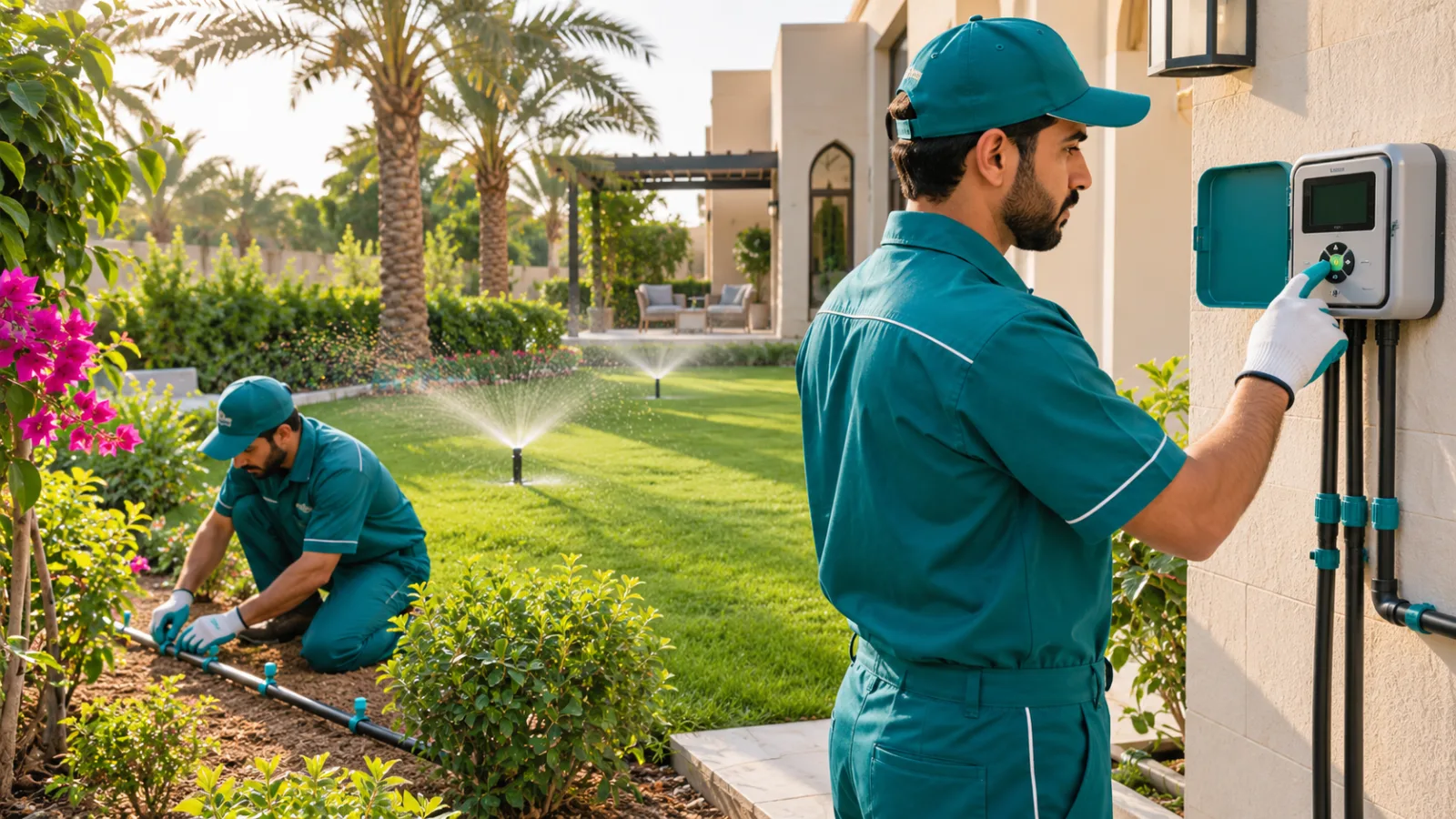
Most home gardens need both: drip for planters and trees and sprinklers for the grass, each in its own zone on the timer.
Irrigation system components
- Water source and a pump where needed for enough pressure.
- A filter before the network to protect the emitters from sand.
- Solenoid valves for each zone.
- An automatic irrigation timer/controller.
- Main and branch lines buried at a suitable depth.
- Emitters and sprinklers with the right flow rate for each plant.
Installation steps
- Drawing the garden and dividing it into zones by plant type and sun.
- Measuring the available water pressure and flow.
- Digging the trenches and laying the lines before planting or grass.
- Installing the valves and timer in a spot protected from sun and water.
- Installing emitters and sprinklers and testing each zone.
- Programming the watering schedule and showing you how to adjust it.
How to save garden water (practical settings)
- Water early in the morning or after sunset to reduce evaporation.
- Adjust the schedule with the seasons; grass needs far more in August than in January.
- Water trees deeper and less often so their roots grow deeper.
- Cover planter soil with a layer of bark or gravel (mulch) to reduce evaporation.
- Check for leaks: a spot that is always wet, or a wilting plant in the middle of a watered zone, is a sign of a fault.
Pricing and guarantee
The system is priced by area, number of zones, and the type of timer and valves: Based on inspection. Guarantee: According to the type of service and the manufacturer. How we price.
Frequently asked questions about irrigation systems
What are the drawbacks of drip irrigation?
The main ones are emitters clogging with salts and sand, and faults being hard to notice because the water is not visible. A good filter and regular checks reduce both.
Can I add a timer to an existing system?
Usually yes, by adding solenoid valves, after checking the condition of the existing system.
How many minutes should I water the grass?
It depends on the sprinkler type, soil and temperature. We set the schedule at handover and adjust it with you for summer and winter.
Contact Safwak
Send photos of the place or describe what you need on WhatsApp. We will arrange an inspection and explain how the price is calculated before any work starts.